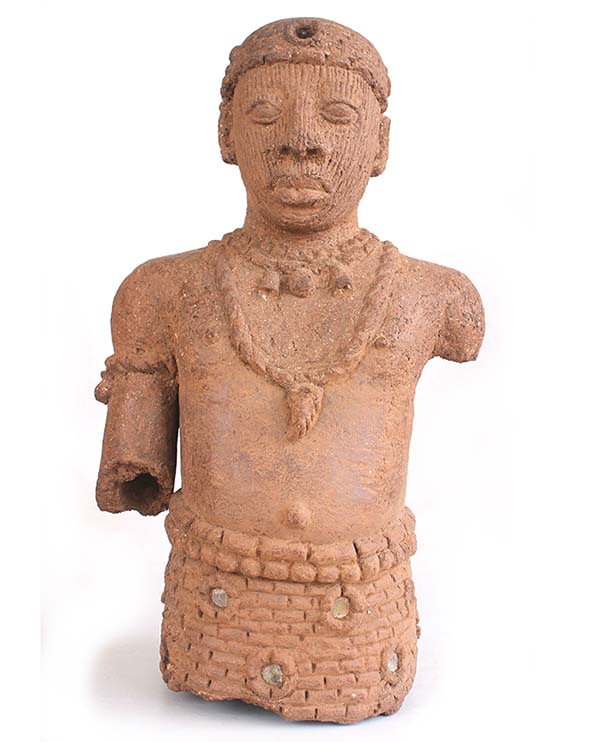
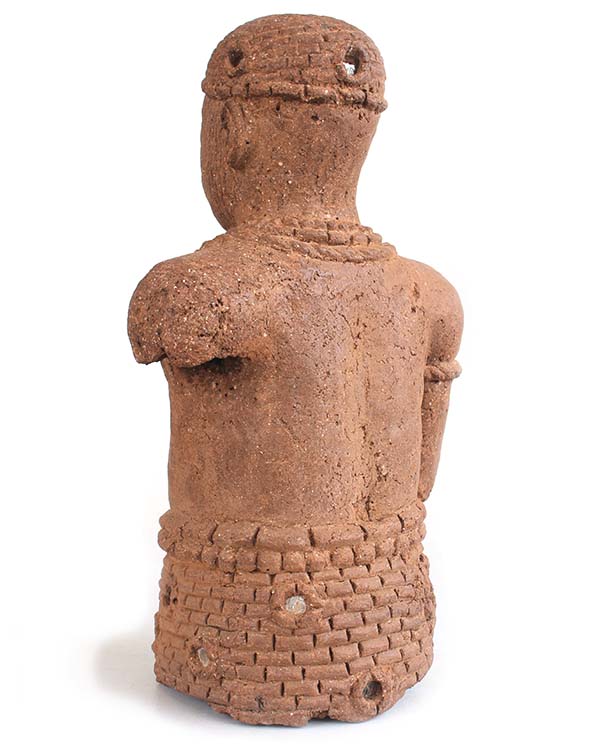
This bust is of great art-historical significance due to its age and realistic depiction. Dating from the 14th century, its size is also remarkable. Whilst the commemorative metal heads are likely idealised portraits, this terracotta piece appears to depict a specific individual.
Fragments of mirror incorporated into the cap and hip belt are not previously known in this style from Ife. As these are most likely imported items, the question arises as to where they came from and from whom they were purchased. A very vague clue might suggest caravan trade and links to the Hausa or Berbers. At first glance, the figure of a young man appears simple, yet the quantity of red coral depicted in the headdress and hip garment is astonishing. The round, tube-shaped corals strung in a row and cut into various sizes are of very high value. The cap appears to be made from a woven pattern of small beads, with the final border formed by large gemstones. The hip garment consists of surprisingly large.
Around the neck, also made of coral, is a necklace from which hang two small bells and a small bead. From a longer piece of jewellery, such as the one on the upper arm, which appears to be braided, hangs a leopard’s tooth as a symbol of strength.
The figurine comes from the estate of a well-known collector and dealer. |